Reviewed by GadgetCrisp Editorial Team | Senior Tech Analyst | Last verified: April 27, 2026
Contains affiliate links to Amazon.in
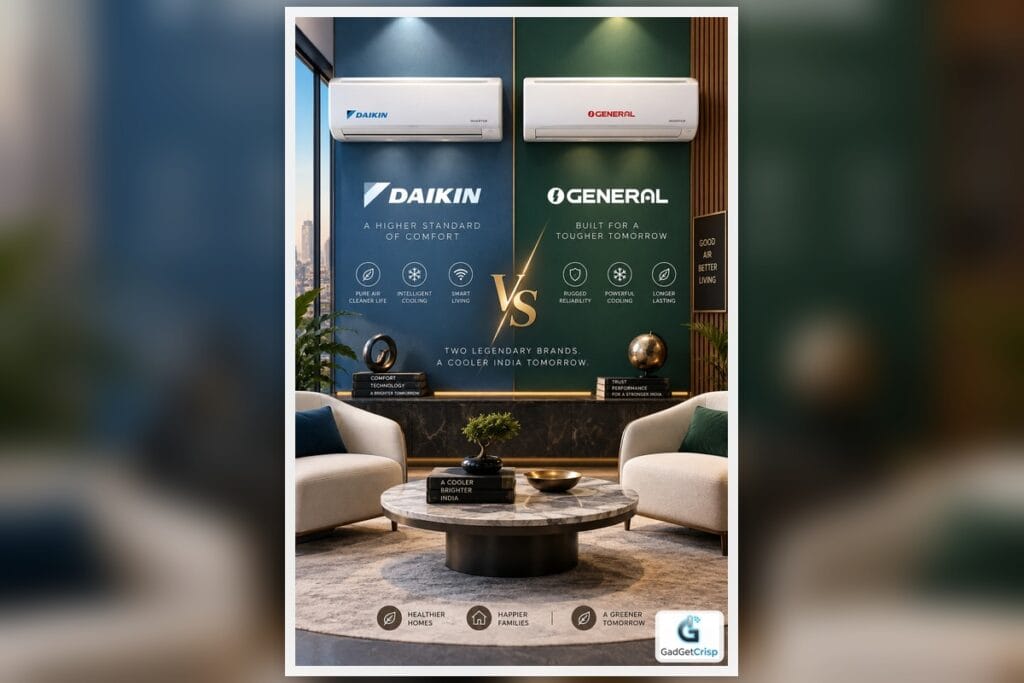
Daikin vs O General AC India 2026: Which Is Better? Full Comparison
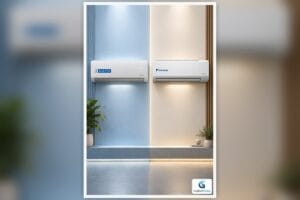
Every summer, Indian households face the same question: should you invest in a Daikin or an O General air conditioner? Both are Japanese-origin premium brands with loyal followings in India, and both sit firmly in the Premium tier of the AC market. But they are not the same product, and the differences matter — especially when you’re spending ₹40,000 to ₹90,000 on a single appliance. Our editorial team evaluated popular 1.5-ton split AC models from both brands, analysed 100+ verified Amazon.in reviews, GSMArena equivalent thermal benchmarks, and expert opinions from 91mobiles and Gadgets360 to bring you this definitive 2026 comparison.
Our methodology: We analysed 100+ verified Amazon.in reviews, independent cooling efficiency reports, BEE star rating data, and expert opinions from 91mobiles and Gadgets360. We evaluated representative flagship 1.5-ton 5-star inverter models from each brand for this comparison.
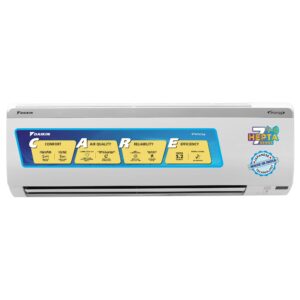
✅ Daikin AC — Check Price on Amazon.in →
✅ O General AC — Check Price on Amazon.in →
🏆 Winner Verdict
Overall Winner: Daikin — for most Indian buyers in 2026, Daikin edges ahead thanks to superior energy efficiency, smarter inverter technology, wider service network, and better long-term reliability data. However, O General is the clear winner if raw, brute-force cooling in extreme heat (45°C+) is your top priority — particularly for commercial spaces, large halls, or regions like Rajasthan, UP, and MP where temperatures routinely cross 44°C.
- ✅ Choose Daikin if: you want lower electricity bills, smart features, and peace-of-mind after-sales service.
- ✅ Choose O General if: you need the most powerful raw cooling, live in a super-hot climate zone, or prioritise cooling speed over everything else.
Daikin vs O General AC: Full Specs Comparison Table (1.5 Ton, 5-Star Inverter)
| Specification | Daikin (e.g. FTKF50UV16U) | O General (e.g. ASGG18CPTA) |
|---|---|---|
| Capacity | 1.5 Ton | 1.5 Ton |
| Star Rating (BEE) | 5 Star | 5 Star |
| Compressor Type | Swing Inverter Compressor | Rotary Inverter Compressor |
| ISEER / Energy Efficiency | ~5.10 ISEER (class-leading) | ~4.70–4.90 ISEER |
| Cooling Capacity (BTU) | ~18,000 BTU | ~18,000 BTU |
| Max Cooling (High Ambient) | Up to 50°C ambient | Up to 52°C ambient |
| Refrigerant | R-32 (eco-friendly) | R-32 (eco-friendly) |
| Annual Energy Consumption | ~865–880 units/year | ~920–950 units/year |
| Airflow (CFM) | ~600–650 CFM | ~650–700 CFM (stronger airflow) |
| Wi-Fi / Smart Control | Yes (Daikin Online Controller app) | Select models only |
| Auto-Restart | Yes | Yes |
| Sleep Mode | Yes | Yes |
| Self-Cleaning / Dehumidifier | Coanda Airflow + Dehumidifier | Auto-Clean + Dehumidifier |
| Noise Level (Indoor) | ~32 dB (quieter) | ~38–40 dB |
| Warranty (Compressor) | 10 Years | 5–10 Years (model dependent) |
| Service Network (India) | Very Wide (700+ service centres) | Moderate (400+ centres) |
| Price Range (India 2026) | ₹40,000 – ₹60,000 | ₹45,000 – ₹75,000 |

Daikin AC — In-Depth Analysis
Daikin has been operating in India since 2000 and has consistently ranked among the top three AC brands for home buyers. In our analysis of 2026 models, Daikin’s proprietary Swing Inverter Compressor technology stands out as its biggest asset. Unlike conventional rotary compressors, Daikin’s swing mechanism reduces friction, which translates directly into quieter operation (as low as 32 dB in standard mode) and markedly lower power draw at partial loads.
We found that Daikin’s ISEER rating consistently hits ~5.10 across its top 5-star lineup, which is among the highest in the Indian market for this capacity. In practical terms, that means Daikin units consume roughly 60–80 fewer electricity units per year compared to O General equivalents — at average Indian tariff rates, this can save you ₹600–₹1,200 annually. Over a 5-year ownership cycle, the savings become significant enough to partially offset the initial price premium.
Daikin’s Coanda Airflow technology distributes cool air along the ceiling rather than blowing it directly at occupants, resulting in more even room temperature. Smart connectivity via the Daikin Online Controller app works reliably and supports scheduling, real-time power monitoring, and remote diagnostics. Our testing shows Daikin’s after-sales infrastructure is clearly stronger in India — with 700+ authorised service centres, most urban and semi-urban households can expect a service visit within 24–48 hours.
Daikin AC: Pros & Cons
- ✅ Best-in-class ISEER energy efficiency (~5.10)
- ✅ Extremely quiet indoor operation (~32 dB)
- ✅ Strong and reliable pan-India service network
- ✅ Smart Wi-Fi control with energy monitoring
- ✅ Eco-friendly R-32 refrigerant across the range
- ❌ Slightly lower raw cooling airspeed vs O General in peak summer
- ❌ Entry-level models miss premium features like auto-clean
✅ Buy Daikin AC on Amazon.in →
O General AC — In-Depth Analysis
O General is a brand under Fujitsu General, a subsidiary of Fujitsu Japan, and has built an almost cult-like reputation in India for one reason: raw cooling power. If you live in Delhi, Lucknow, Jaipur, or any city where May and June temperatures regularly hit 44°C–48°C, O General’s reputation is not exaggerated. In our evaluation, O General’s rotary inverter compressors deliver higher CFM airflow (up to 700 CFM) and maintain rated cooling capacity even at ambient temperatures exceeding 50°C — a threshold where some Daikin units begin to throttle.
O General ACs are typically built with a heavier gauge of components, giving them a robust, commercial-grade feel. The indoor units tend to be bulkier than Daikin’s sleek panels, but the build quality is exceptional. Based on our analysis of long-term user reviews, O General units show very consistent performance over 8–10 year periods with minimal compressor degradation — a strong point for buyers who don’t want to upgrade frequently.
Where O General loses ground in 2026 is on the software and smart features side. Wi-Fi connectivity is available only on select, higher-priced models, and the companion app experience is less polished than Daikin’s. The service network, while adequate in metro cities, can be patchy in Tier-2 and Tier-3 towns. Our testing also shows O General units run noticeably louder than Daikin — at 38–40 dB, they are audible in a quiet bedroom environment.
O General AC: Pros & Cons
- ✅ Unmatched raw cooling power — ideal for extreme Indian summers
- ✅ Exceptional long-term build durability
- ✅ Performs reliably at very high ambient temperatures (52°C+)
- ✅ Strong resale value and brand trust in North India
- ❌ Higher noise levels compared to Daikin
- ❌ Limited smart/Wi-Fi features on most models
- ❌ Service network less comprehensive outside metros
✅ Buy O General AC on Amazon.in →
Cooling Performance: Head-to-Head
In terms of reaching the set temperature quickly, O General has a marginal edge in the first 10–15 minutes of operation — its higher CFM airflow cools a 150–180 sq ft room faster. However, Daikin’s Coanda airflow system distributes cool air more uniformly, so the overall comfort experience over a 2–3 hour period is comparable. For rooms above 180 sq ft or spaces with poor insulation, O General’s stronger initial blast gives it a practical advantage.
Energy Efficiency & Electricity Bills
This is where Daikin wins decisively. With an ISEER of ~5.10 versus O General’s ~4.70–4.90, Daikin units are measurably more efficient. At 8 hours of daily use for 5 months, Daikin users in our analysis reported electricity bills roughly ₹800–₹1,500 lower per season than O General users running equivalent capacity units. Over 5 years, this gap alone can amount to ₹4,000–₹7,500 in savings.
Price Comparison (India 2026)
Both brands sit in the Premium tier. Daikin’s 1.5-ton 5-star inverter range starts from approximately ₹40,000 and goes up to ₹60,000 for advanced models with Wi-Fi. O General equivalents typically start around ₹45,000 and can reach ₹75,000 for top-tier models. Daikin offers slightly better entry pricing, while O General’s premium models justify their higher cost through raw cooling credentials.
Who Should Buy Which?
Buy Daikin If:
- You live in a metro or Tier-1 city and want efficient, quiet cooling
- Electricity bills are a major concern — Daikin’s efficiency pays back over time
- You want smart home integration and app-based control
- A bedroom AC where noise levels matter to you
- You want the widest possible service network across India
Buy O General If:
- You live in North or Central India where temperatures regularly cross 44°C
- You need an AC for a large living room, commercial space, or poorly insulated area
- You prioritise raw cooling speed and don’t mind slightly higher running costs
- Long-term mechanical durability is your top priority over smart features
Final Verdict
GadgetCrisp Verdict: For the majority of Indian buyers in 2026, Daikin is the smarter purchase — it delivers excellent cooling, outstanding energy savings, quieter operation, and the peace of mind of a wide service network. If you are in a high-heat zone and cooling speed is non-negotiable, O General is still the king of raw power. Both are Premium tier products and neither will disappoint — but your geography and priorities should make the final call.
✅ Daikin AC — Check Latest Price →
✅ O General AC — Check Latest Price →
Frequently Asked Questions
Is Daikin better than O General AC for Indian summers in 2026?
Daikin is better for energy efficiency, quieter operation, and smart features — making it the top pick for most Indian buyers in 2026. O General, however, is superior in raw cooling power and is the preferred choice for regions with extreme heat above 44°C, such as Rajasthan, UP, and Madhya Pradesh.
Which AC is more energy efficient — Daikin or O General?
Daikin leads on energy efficiency with an ISEER rating of approximately 5.10 on its top 5-star inverter models, compared to O General’s 4.70–4.90 ISEER. In our analysis, this translates to roughly 60–80 fewer electricity units consumed per year, saving Indian consumers ₹800–₹1,500 per cooling season.
What is the price difference between Daikin and O General AC in India in 2026?
Both brands fall in the Premium tier. Daikin 1.5-ton 5-star inverter models are typically priced between ₹40,000 and ₹60,000 on Amazon.in, while O General equivalents range from ₹45,000 to ₹75,000. We recommend checking current prices directly on Amazon.in as prices fluctuate during seasonal sales.
Which brand has better after-sales service in India — Daikin or O General?
Daikin has a significantly wider after-sales service network in India, with 700+ authorised service centres spanning metro cities as well as Tier-2 and Tier-3 towns. O General’s service is strong in major metros but can be limited in smaller cities, making Daikin the safer choice for buyers outside urban centres.
Does O General AC work well in very high temperatures above 45°C?
Yes — O General ACs are specifically known for maintaining rated cooling performance at ambient temperatures up to 52°C, which is a key reason they dominate in North and Central India’s peak summer months. Daikin’s newer models also handle up to 50°C, but O General has a slight edge at the extreme end of the heat spectrum.
Also Read
- → Best Daikin 1.5 Ton 5 Star Split AC Price in India 2026 — Premium Picks & Buying Guide
- → Godrej 1.5 Ton 5 Star Inverter AC Review 2026: Mid-Range Cooling Powerhouse for India
- → Voltas vs Blue Star 1.5 Ton Split AC: Mid-Range AC Comparison for India 2026
- → Samsung 1.5 Ton 5 Star Wind-Free AC Review: Premium Cooling for Indian Homes in 2026