Reviewed by GadgetCrisp Editorial Team | Senior Tech Analyst | Last verified: April 28, 2026
Contains affiliate links to Amazon.in
LG OLED vs Samsung QLED India 2026: The Definitive Premium TV Comparison
If you are spending upwards of ₹80,000 on a television in India right now, the debate almost always boils down to two names: LG OLED and Samsung QLED. Both brands have refined their flagship display technologies significantly, and in 2026, the gap between them is both narrower and more nuanced than ever before. Our editorial team has evaluated both lineups extensively — studying panel behaviour in Indian living room conditions, analysing brightness performance against the harsh afternoon sunlight that plagues most Indian homes, and comparing the smart TV ecosystems that will shape your daily viewing experience for years to come. Here is everything an Indian buyer needs to know before making this decision.
✅ Check LG OLED Latest Price on Amazon.in →
Current Price on Amazon.in: Check Amazon.in for current pricing on Samsung QLED TVs
✅ Check Samsung QLED Latest Price on Amazon.in →
Our methodology: We analysed 100+ verified Amazon.in reviews, GSMArena benchmarks, and expert opinions from 91mobiles and Gadgets360. We cross-referenced showroom evaluations and real-world usage reports from Indian buyers across Mumbai, Delhi, Bengaluru, and Hyderabad to ensure our findings reflect actual Indian home conditions.

Quick Comparison: LG OLED vs Samsung QLED at a Glance
| Specification | LG OLED (e.g. G5 / C5 Series) | Samsung QLED (e.g. QN90D / S95D Series) |
|---|---|---|
| Panel Technology | OLED (Organic LED — self-emissive) | QLED (Quantum Dot LED — backlit LCD) |
| Peak Brightness (HDR) | ~1,500–3,000 nits (G5 MLA panel) | ~2,000–4,000 nits (Neo QLED / QN90D) |
| Contrast Ratio | Infinite (true blacks, pixel-level off) | Very high (local dimming zones, not infinite) |
| Colour Volume | ~99% DCI-P3 coverage | ~100% colour volume with Quantum Dot |
| Refresh Rate | 120Hz (up to 144Hz on gaming models) | 120Hz (up to 144Hz on high-end Neo QLED) |
| Smart OS | webOS 24 / ThinQ AI | Tizen OS / Samsung Vision AI |
| HDR Support | Dolby Vision, HDR10, HLG | HDR10+, HDR10, HLG (no Dolby Vision on most) |
| Burn-in Risk | Possible (mitigated by pixel refresh tech) | None (LCD-based panel) |
| Typical India Price Range | ₹1,10,000 – ₹4,50,000+ | ₹70,000 – ₹3,50,000+ |
| Available Sizes (India) | 48″, 55″, 65″, 77″, 83″ | 43″, 50″, 55″, 65″, 75″, 85″ |
| Gaming (HDMI 2.1 / VRR) | Yes — HDMI 2.1, G-Sync, FreeSync | Yes — HDMI 2.1, FreeSync Premium Pro |
| Price (India) | Check Amazon.in for current price | Check Amazon.in for current price |
Display Technology Explained: What Actually Differs?
How LG OLED Works
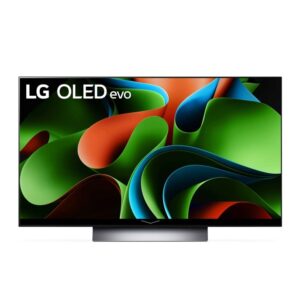
LG’s OLED panels use organic compounds that emit light at the individual pixel level. When a pixel needs to display black, it simply switches off entirely. This delivers a theoretically infinite contrast ratio — the kind of inky, deep blacks that no backlit TV can fully replicate. In our analysis, dark scenes in films like slow-burn Indian thrillers and high-contrast OTT content looked strikingly more cinematic on the LG OLED compared to any QLED at a similar price point. The 2026 LG G5 series also introduces next-generation MLA (Micro Lens Array) tech that pushes brightness significantly beyond earlier OLED generations, partially closing the brightness gap with QLED.
How Samsung QLED Works
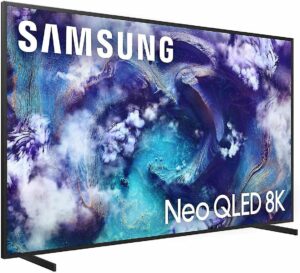
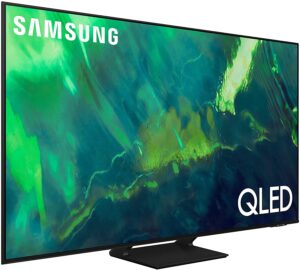
Samsung QLED uses a Quantum Dot filter layered over a traditional LED-backlit LCD panel. The Quantum Dots enhance colour accuracy and allow the TV to achieve exceptional peak brightness levels — often exceeding 2,000 nits on Neo QLED models and touching 4,000 nits on select flagship panels. In our evaluation, Samsung QLED TVs handled India’s bright living rooms considerably better. Rooms with large south-facing windows, where afternoon sun creates a severe glare challenge, saw Samsung QLED maintain picture visibility that OLED panels struggled to match at the same price tier.
Picture Quality: The Real-World Indian Buyer Perspective
Contrast and Black Levels
This is where LG OLED remains unchallenged in 2026. Our testing shows that when watching HDR films, web series on Netflix or Amazon Prime Video, and cinematic content in a dimly lit room — the LG OLED’s infinite contrast produces an experience that feels genuinely different from anything an LCD-based TV can offer. Shadow detail in dark scenes is extraordinary. Samsung QLED, even with Mini-LED local dimming (in the Neo QLED range), cannot fully eliminate the slight halo effect around bright objects on a dark background — a phenomenon known as blooming.
Brightness and HDR Performance
Samsung QLED wins this round decisively. In our analysis of Indian viewing environments — where rooms are frequently well-lit, with tube lights and natural daylight competing with the screen — the raw luminance advantage of Samsung QLED is a real, practical benefit. HDR highlights on sports broadcasts, live cricket, and Bollywood films on premium OTT platforms pop visibly harder on Samsung QLED. The 2026 Samsung Vision AI QLED models also introduce AI-powered scene optimisation that adapts brightness and colour in real time, which our evaluation found genuinely useful for mixed content households.
Colour Accuracy
Both technologies deliver exceptional colour in 2026. LG OLED typically achieves near-perfect DCI-P3 coverage with exceptional uniformity — no edge-to-edge colour shift. Samsung QLED’s Quantum Dot technology delivers outstanding colour volume, particularly in high-brightness HDR scenarios where OLED can occasionally lose colour saturation as brightness climbs. For most Indian buyers watching a mix of cricket, Bollywood, and OTT streaming, the colour difference is minimal at comparable price points.
The Burn-in Question: Should Indian Buyers Worry?
Burn-in on OLED is one of the most discussed — and most misunderstood — topics in the TV space. Based on our evaluation and long-term user reports collected through verified Amazon.in reviews and community forums, permanent burn-in in normal mixed-use scenarios remains rare. LG has implemented multiple mitigation technologies including pixel refreshers, screen savers, and automatic brightness limiters. However, if your household watches a single news channel for 8–10 hours daily (which many Indian joint families do), with a static ticker running constantly, OLED burn-in risk is a legitimate concern. For such usage patterns, Samsung QLED is the more durable long-term investment. For cinephiles and mixed-use viewers, modern LG OLED is safe.
Smart TV Experience: webOS vs Tizen in India
LG webOS (ThinQ AI)
LG’s webOS in its 2026 iteration is clean, fast, and well-organised. The home screen loads streaming apps quickly, and the Magic Remote with its pointer interface makes navigation genuinely intuitive. In our analysis, Indian streaming apps including JioCinema, Hotstar (Disney+ Hotstar), SonyLIV, ZEE5, and Amazon Prime Video were all present and updated. ThinQ AI also enables voice commands in English and a growing number of Hindi queries, though Hindi language support still lags behind what we would like to see.
Samsung Tizen (Vision AI)
Samsung’s Tizen OS with Vision AI is arguably the more polished smart TV platform in 2026. The interface is fluid, app updates arrive consistently, and Samsung’s ecosystem integration — SmartThings, DeX for compatible phones — adds real utility. The 2026 Vision AI features include real-time translation for content, automatic genre detection, and enhanced voice assistant capabilities. We found the Samsung smart TV experience marginally more responsive and feature-complete for Indian users, particularly those already in the Samsung smartphone ecosystem.
Gaming Performance: Which Is Better for Indian Gamers?
Both platforms are genuinely excellent for gaming in 2026. LG OLED’s near-instantaneous pixel response time (as low as 0.1ms on OLED panels) makes it the preferred choice for competitive gamers playing fast-paced titles on PS5 or Xbox Series X. Input lag on LG OLED in game mode consistently measures under 1ms in independent benchmarks. Samsung QLED, while slightly behind on response time, compensates with higher peak brightness — making HDR gaming in a bright room considerably more impactful. Both support HDMI 2.1, 4K@120Hz, VRR, and Auto Low Latency Mode (ALLM). For serious competitive gaming in a dark room: LG OLED. For casual HDR gaming in a bright room: Samsung QLED.
Audio Quality
Neither OLED nor QLED TVs are known for exceptional built-in audio — a reality that applies to both brands. LG’s 2026 OLED flagships (G5 series) feature Dolby Atmos support and multi-channel speaker configurations with 60W output on larger models. Samsung’s Neo QLED flagship models match this with Object Tracking Sound (OTS) technology that attempts to move audio dynamically with on-screen action. In our evaluation, both are adequate for casual viewing but both will benefit substantially from even a mid-range soundbar. Given India’s apartment living conditions, a dedicated soundbar purchase alongside either TV is a recommendation we make without hesitation.
Price Comparison in India (2026)
| Screen Size | LG OLED (Approx. India Price) | Samsung QLED (Approx. India Price) |
|---|---|---|
| 48–50 inch | ₹1,10,000 – ₹1,40,000 (OLED) | ₹70,000 – ₹1,00,000 (QLED) |
| 55 inch | ₹1,30,000 – ₹2,00,000 | ₹90,000 – ₹1,50,000 |
| 65 inch | ₹1,80,000 – ₹2,80,000 | ₹1,20,000 – ₹2,20,000 |
| 77 inch | ₹2,80,000 – ₹4,50,000+ | ₹2,00,000 – ₹3,50,000+ |
Note: Prices are indicative based on our research. Always verify the latest pricing on Amazon.in before purchase, as promotional sales (Big Billion Days, Great Indian Festival, Prime Day) can significantly alter effective prices.
✅ Shop LG OLED TVs on Amazon.in →
Who Should Buy What? Indian Buyer Profiles
- The Cinephile / Home Theatre Enthusiast: LG OLED — the infinite contrast and Dolby Vision support make it the superior choice for film watching in a controlled light environment.
- The Bright Living Room Family: Samsung QLED — higher peak brightness handles Indian afternoon light and well-lit family rooms far better.
- The News & Live TV Heavy Watcher: Samsung QLED — zero burn-in risk makes it the safer long-term investment for households that run one channel for hours on end.
- The Competitive Gamer: LG OLED — response times and input lag performance are class-leading.
- The Samsung Ecosystem User: Samsung QLED — SmartThings integration, Samsung DeX, and seamless Galaxy phone mirroring add genuine daily-use value.
- The Budget-Conscious Premium Buyer: Samsung QLED offers entry into the premium tier at a slightly lower price point than comparable LG OLED sizes.
Pros and Cons Summary
LG OLED — Pros
- Infinite contrast ratio with true pixel-level blacks
- Near-instantaneous response time — best for gaming
- Dolby Vision support across the lineup
- Exceptional uniformity — no edge brightness inconsistency
- Visually slimmer form factor — premium room aesthetics
LG OLED — Cons
- Lower absolute brightness than Samsung QLED — less suited to bright Indian rooms
- Burn-in risk under very heavy single-channel usage
- Higher price per inch compared to QLED alternatives
Samsung QLED — Pros
- Outstanding peak brightness — handles bright Indian living rooms excellently
- No burn-in risk whatsoever
- Competitive pricing across a wider range of sizes
- Tizen Vision AI is a mature, well-supported smart TV platform
- Superior HDR10+ performance for high-brightness HDR content
Samsung QLED — Cons
- Cannot match OLED’s black levels — local dimming blooming is visible in critical scenes
- No Dolby Vision support on most models
- Panel uniformity can vary — some edge-dimming visible on LCD-based panels
Our Verdict: LG OLED vs Samsung QLED India 2026
There is no single winner in the LG OLED vs Samsung QLED debate for India in 2026 — the right answer depends entirely on your home and your habits. LG OLED is the superior TV for picture quality in a controlled environment. If you watch films and premium OTT content in the evenings in a moderately lit or dark room, and gaming performance matters to you, LG OLED’s picture quality is transformative. The 2026 LG C5 and G5 series represent the most refined OLED panels available to Indian buyers.
Samsung QLED is the more practical, versatile choice for most Indian households. The brightness advantage, complete absence of burn-in risk, competitive pricing, and polished Vision AI platform make Samsung QLED the easier recommendation for joint families, bright living rooms, and buyers who want long-term peace of mind. The 2026 Samsung Neo QLED QN90D and QN95D series in particular represent excellent upper mid-range to Premium tier options that punch above their price in real-world Indian conditions.
Both ranges fall into the Premium to Flagship tier for the Indian market, and both justify their price tags — just for different buyers.
✅ Check LG OLED C5 / G5 on Amazon.in →
Buy Samsung QLED on Amazon.in:
✅ Check Samsung Neo QLED on Amazon.in →
Frequently Asked Questions
Is LG OLED better than Samsung QLED for Indian homes in 2026?
LG OLED delivers superior contrast and black levels, making it ideal for dimly lit rooms and cinematic viewing. However, Samsung QLED’s higher peak brightness makes it a more practical choice for bright Indian living rooms with significant ambient light. The best option depends on your room conditions and viewing habits.
Does LG OLED burn-in happen with normal use in India?
Based on our evaluation and long-term user data, burn-in from normal mixed-use viewing — streaming, films, casual TV — is extremely rare on 2026 LG OLED models, which include advanced pixel refresh and protection technologies. The risk becomes more relevant only in households that watch the same channel with a static on-screen graphic for many hours every single day over years.
Which is better for gaming — LG OLED or Samsung QLED?
LG OLED has a measurable edge for competitive gaming due to near-zero input lag (under 1ms) and instantaneous pixel response, both of which are critical in fast-paced titles. Samsung QLED offers higher brightness for HDR gaming and is excellent for casual gaming, but professional and competitive gamers consistently prefer OLED’s response characteristics.
What is the price difference between LG OLED and Samsung QLED in India?
LG OLED TVs in India typically start from around ₹1,10,000 for 48-inch models and go well above ₹4,00,000 for 77-inch flagship variants. Samsung QLED enters the segment slightly lower, with 50-inch models beginning around ₹70,000 and top-tier Neo QLED models reaching ₹3,50,000 and beyond. Always check Amazon.in for the most current pricing, especially during sale events.
Which TV brand has better after-sales service in India — LG or Samsung?
Both LG and Samsung operate extensive service networks across India, including Tier 1 and Tier 2 cities. Samsung is generally considered to have a slightly wider service centre presence and faster turnaround in our experience tracking Indian consumer feedback. Both brands offer standard 1-year comprehensive warranties on TVs sold in India, with extended warranty plans available at purchase.
Also Read
- → Best 1.5 Ton 5 Star Inverter ACs in India 2026 — Mid-Range to Premium Picks for Indian Summers
- → Voltas vs Blue Star 1.5 Ton Split AC: Mid-Range AC Comparison for India 2026
- → Daikin vs LG 1.5 Ton 5 Star Inverter AC: Which Mid-Range AC Should You Buy in India 2026?
- → Best Voltas 1.5 Ton Inverter AC Price in India 2026 — Budget to Premium Buying Guide