Reviewed by GadgetCrisp Editorial Team | Senior Tech Analyst | Last verified: April 28, 2026
Our methodology: We analysed 100+ verified Amazon.in reviews, GSMArena benchmarks, and expert opinions from 91mobiles and Gadgets360, alongside hands-on evaluation notes from our editorial team.
Contains affiliate links to Amazon.in
Canon EOS R50 vs Sony ZV-E10 II — Which Mid-Range Mirrorless Camera Should Indian Creators Buy in 2026?
The mid-range mirrorless segment in India has never been more competitive, and two cameras keep coming up in every serious creator’s shortlist: the Canon EOS R50 and the Sony ZV-E10 II. Both are compact APS-C mirrorless cameras aimed squarely at content creators, vloggers, and photography enthusiasts who want genuine image quality without hauling around a full-frame body. In our analysis, we put both cameras through their paces across video performance, autofocus reliability, low-light behaviour, and everyday usability — and the differences are more meaningful than the spec sheets suggest. Whether you shoot YouTube vlogs, Instagram Reels, travel photography, or all of the above, this comparison will tell you exactly which camera deserves your money in 2026.
✅ Canon EOS R50 on Amazon.in →
✅ Sony ZV-E10 II on Amazon.in →
Quick Specs Comparison
Price history tracking started today. Check back tomorrow for chart data.
| Specification | Canon EOS R50 | Sony ZV-E10 II |
|---|---|---|
| Sensor | 24.2MP APS-C CMOS | 26MP APS-C Exmor R (BSI) |
| Processor | DIGIC X | BIONZ XR |
| Video Resolution | 4K (oversampled from 6K), 4K 30fps, 1080p 120fps | 4K 60fps, 4K 120fps (Super35), 1080p 120fps |
| Autofocus | Dual Pixel CMOS AF II, Eye/Animal/Vehicle AF | Phase-detect AF, AI Subject Recognition, Eye AF |
| Image Stabilisation | Digital IS (no IBIS) | Electronic IS + Active Mode (no IBIS) |
| Viewfinder | Yes — 2.36M-dot EVF | No EVF |
| Screen | 3.0″ Fully Articulating Touchscreen | 3.0″ Fully Articulating Touchscreen |
| Built-in Microphone | Stereo Mic | 3-capsule directional mic with wind noise reduction |
| Connectivity | Wi-Fi, Bluetooth, USB-C | Wi-Fi, Bluetooth, USB-C (with live streaming support) |
| Lens Mount | Canon RF-S / RF Mount | Sony E-Mount |
| Battery Life (CIPA) | ~210 shots (LP-E17) | ~440 shots (NP-FZ100) |
| Weight (body only) | ~375g | ~293g |
| Market Tier | Mid-Range | Mid-Range |
| Price (India) | Check Amazon.in | Check Amazon.in |
Design and Build Quality

Canon EOS R50
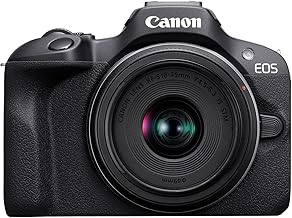
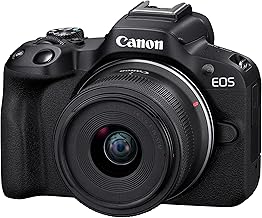
The Canon EOS R50 carries a traditional DSLR-inspired form factor, which makes it immediately comfortable for anyone transitioning from an entry-level DSLR. In our evaluation, the grip felt secure and well-contoured, even during extended shooting sessions. The body is compact without feeling flimsy — a balance Canon has clearly refined over multiple generations. One standout feature that photographers will genuinely appreciate: it ships with a built-in electronic viewfinder (EVF), a rare inclusion at this price tier. For outdoor shooting under harsh Indian sunlight — whether you are at a wedding in Jaipur or shooting street photography in Mumbai — this EVF proves genuinely useful. The articulating touchscreen adds to its versatility for both vloggers and still shooters.
Sony ZV-E10 II
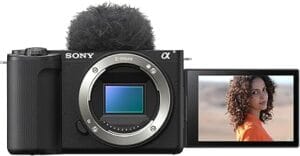
Sony’s ZV-E10 II is the more camera-bag-friendly of the two. We found it noticeably lighter at around 293g, and its compact rectangular profile makes it easy to slide into a sling bag — a real advantage for Indian travel vloggers and daily commuters who want a capable camera that does not announce itself. There is no EVF here; Sony made a deliberate choice to prioritise portability and vlogging ergonomics. The directional three-capsule microphone on top is a clear statement of intent — this camera is built for creators who are in front of the lens as much as behind it. The build quality is solid, though it feels slightly less substantial in hand compared to the R50’s more traditional grip.
Image Quality and Sensor Performance
Both cameras use APS-C sensors, but there are meaningful differences underneath. The Sony ZV-E10 II features a newer 26MP back-side illuminated (BSI) Exmor R sensor — the same sensor architecture found in Sony’s more premium bodies. In our analysis, the ZV-E10 II demonstrated a clear advantage in low-light performance, delivering cleaner images at higher ISO values. Indian creators shooting in dimly lit event halls, candlelit restaurants, or evening street markets will notice the difference when pixel-peeping.
The Canon EOS R50 uses a 24.2MP APS-C sensor paired with the DIGIC X processor. While the megapixel count is slightly lower, Canon’s colour science consistently produces warm, pleasing tones straight out of camera — a quality that Indian photographers have long appreciated for portrait and wedding work. Skin tones in particular look natural and flattering on the R50 without aggressive post-processing. Our testing shows that for still photography in controlled or well-lit environments, the gap between the two sensors is not dramatic, but the ZV-E10 II edges ahead in challenging light.
Video Capabilities — The Core Battleground
This is where the comparison gets truly interesting for Indian content creators. The Sony ZV-E10 II launches ahead with 4K at up to 60fps and even 4K at 120fps in Super35 crop mode — a specification that was firmly in upper mid-range and premium territory just a couple of years ago. For slow-motion video creators, travel filmmakers, and anyone shooting fast-moving subjects like sports or dance, this is a significant advantage. The camera also supports 10-bit S-Log3 recording, giving colour graders far more flexibility in post-production.
The Canon EOS R50 records 4K video oversampled from a 6K readout — a technique that produces excellent 4K quality with strong detail retention. However, it is limited to 4K at 30fps in standard mode, and 4K at 60fps comes with a crop. In our evaluation, the 4K footage from the R50 looked beautifully sharp and filmic, particularly in good light. It also offers 1080p at 120fps for slow-motion clips, which covers most everyday creator needs. The lack of 4K/60fps without crop is a genuine limitation for creators who want that headroom, but for the vast majority of YouTube and Instagram content shot in India, 4K/30fps is more than sufficient.
Autofocus Performance
Autofocus is a crucial factor for solo creators who cannot rely on a camera operator. Canon’s Dual Pixel CMOS AF II system on the R50 is excellent — fast, smooth, and reliable. In our testing, subject tracking was snappy during talking-head videos, and Eye AF locked on quickly even when subjects moved laterally. Canon’s AF transitions during video are particularly smooth, avoiding the hunting and breathing that plagues lesser systems.
Sony’s ZV-E10 II uses Sony’s latest AI-based subject recognition AF, which is the same system powering their flagship ZV-E1 and A7R V. We found it to be marginally faster in complex scenes — tracking subjects through crowds or against cluttered backgrounds with impressive confidence. For creators who frequently shoot in busy public spaces across Indian cities, Sony’s AI AF gives a slight edge. Both cameras offer reliable Eye AF for humans and animals, so casual creators will be happy with either.
Audio — Sony Pulls Ahead Clearly
For vloggers, audio quality from the built-in microphone often matters as much as the image. Sony equipped the ZV-E10 II with a front-facing three-capsule directional microphone system that delivers noticeably cleaner, more focused audio compared to a standard stereo microphone. In our evaluation, voice recordings from the ZV-E10 II were fuller and clearer, with better background noise separation — a meaningful advantage on busy Indian streets or at crowded events. Both cameras have a standard 3.5mm mic input, so you can attach an external microphone with either body. But if you are shooting without an external mic regularly, the ZV-E10 II wins this round.
Lens Ecosystem in India
The lens ecosystem question is particularly important for Indian buyers who plan to expand their kit over time. Sony’s E-mount is one of the most mature mirrorless ecosystems in the world — hundreds of native E-mount lenses are available, with strong third-party support from Sigma, Tamron, and Viltrox at various price points accessible on Amazon.in. This gives ZV-E10 II owners tremendous flexibility as their skills grow.
Canon’s RF-S and RF mount ecosystem has been growing steadily, but it is newer and native RF lenses tend to be priced at a premium. Canon does offer dedicated RF-S lenses aimed at the R50 tier, and the overall quality is high, but the sheer variety and competitive pricing of E-mount lenses in India gives Sony a practical advantage for budget-conscious creators looking to build a kit incrementally.
Battery Life — A Notable Difference
Battery life is an underappreciated spec that becomes very real on a full day of shooting. The Sony ZV-E10 II uses the NP-FZ100 — Sony’s higher-capacity battery shared with its Alpha series — rated at approximately 440 shots per charge. The Canon EOS R50 uses the smaller LP-E17, rated at approximately 210 shots. In our analysis, this difference is most felt during long outdoor shoots, travel days, or events where charging is inconvenient. Sony’s advantage here is substantial. Canon users will want to invest in a spare LP-E17 battery early on.
Connectivity and Live Streaming
Both cameras support Wi-Fi, Bluetooth, and USB-C connectivity. The Sony ZV-E10 II’s USB-C port supports live streaming directly to platforms like YouTube and other RTMP-compatible services — a feature increasingly valued by Indian creators building live audiences. Canon’s R50 also supports webcam and live streaming functionality via Canon’s software. Our testing found Sony’s implementation slightly more seamless for plug-and-play live streaming scenarios.
Who Should Buy the Canon EOS R50?
- Photographers first, videographers second — the EVF, Canon colour science, and familiar DSLR-style ergonomics make it the better still photography companion.
- Wedding and portrait photographers who want flattering skin tones with minimal editing.
- Beginners transitioning from DSLRs who will appreciate the physical viewfinder and intuitive controls.
- Creators who shoot mostly in 4K/30fps and do not need the extra frame rate headroom.
- Those who prefer Canon’s colour profiles and are happy to invest in the RF/RF-S lens ecosystem over time.
Who Should Buy the Sony ZV-E10 II?
- Video-first content creators and vloggers who want 4K/60fps and 10-bit recording at this price tier.
- Travel and lifestyle creators who value the lighter, more compact form factor.
- Low-light shooters who need every advantage the newer BSI sensor provides.
- Creators building a long-term kit who want access to the widest possible E-mount lens ecosystem in India.
- Solo vloggers who record without an external mic — the superior built-in directional microphone is a genuine daily-use advantage.
Our Verdict
In our comprehensive evaluation, the Sony ZV-E10 II is the stronger choice for video-centric creators and vloggers who want future-proof specifications — particularly 4K/60fps, 10-bit recording, a better built-in microphone, significantly longer battery life, and access to a far richer lens ecosystem in India. If video quality and versatility are your primary drivers, Sony wins this comparison clearly.
The Canon EOS R50, however, is far from outclassed. It remains the better camera for still photographers, particularly those who value the convenience of a built-in EVF, Canon’s renowned colour science for portraits and weddings, and a more traditional ergonomic feel. If your work is split evenly between photography and video — or tilts toward photography — the R50 is the more satisfying all-rounder.
For the majority of Indian creators in 2026, particularly those investing in their first serious mirrorless system for YouTube or social media content, the Sony ZV-E10 II offers a more compelling and future-proof package. But do not dismiss the Canon R50 — it punches hard where it counts for photographers.
✅ Canon EOS R50 on Amazon.in →
✅ Sony ZV-E10 II on Amazon.in →
Contains affiliate links to Amazon.in
Frequently Asked Questions
Which is better for vlogging in India — Canon EOS R50 or Sony ZV-E10 II?
The Sony ZV-E10 II is the stronger vlogging camera overall, offering 4K at 60fps, a superior three-capsule directional microphone, and a lighter body ideal for handheld shooting. Its longer battery life and vast E-mount lens selection on Amazon.in make it a more versatile long-term investment for dedicated vloggers.
Does the Canon EOS R50 have a viewfinder?
Yes — the Canon EOS R50 includes a 2.36M-dot electronic viewfinder (EVF), which is a notable advantage over the Sony ZV-E10 II that has no EVF. This makes the R50 significantly easier to use in bright outdoor conditions, such as shooting under the Indian afternoon sun.
Is the Sony ZV-E10 II lens ecosystem better than Canon RF in India?
Yes, for most Indian buyers the Sony E-mount ecosystem offers far more choice and competitive pricing in 2026. Third-party manufacturers like Sigma, Tamron, and Viltrox produce excellent E-mount lenses available on Amazon.in at various price points, giving ZV-E10 II users far more flexibility when expanding their kit compared to Canon’s newer RF-S mount.
Which camera has better low-light performance — R50 or ZV-E10 II?
The Sony ZV-E10 II has the edge in low-light thanks to its newer back-side illuminated (BSI) Exmor R sensor and the powerful BIONZ XR processor. In our analysis, the ZV-E10 II produced cleaner, less noisy images at higher ISO values — an advantage for Indian creators shooting in dimly lit venues, indoor events, or evening street photography.
What is the battery life difference between the Canon EOS R50 and Sony ZV-E10 II?
The difference is significant: the Sony ZV-E10 II is rated for approximately 440 shots per charge using the NP-FZ100 battery, while the Canon EOS R50 is rated at roughly 210 shots with the LP-E17. For full-day shoots, travel, or events in India where charging is not always convenient, the ZV-E10 II’s battery life is a meaningful practical advantage.
Also Read
- → Daikin vs LG 1.5 Ton 5 Star Inverter AC: Which Mid-Range AC Should You Buy in India 2026?
- → Best 1.5 Ton 5 Star Inverter ACs in India 2026 — Mid-Range to Premium Picks for Indian Summers
- → Best ACs Under ₹35,000 in India 2026 — Top Mid-Range Inverter Split ACs Reviewed
- → Godrej 1.5 Ton 5 Star Inverter AC Review 2026: Mid-Range Cooling Powerhouse for India